
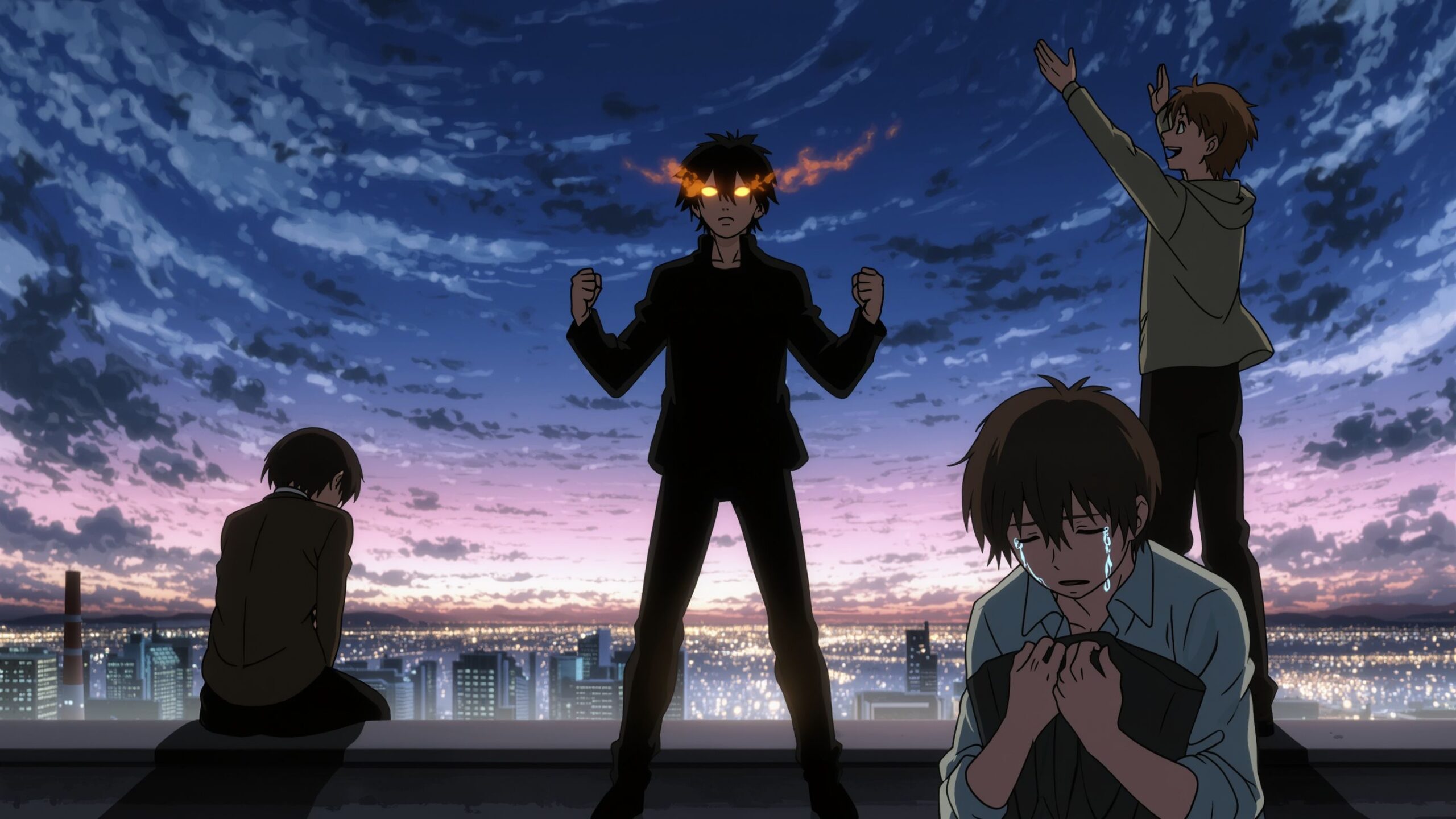
Emotional arcs are the heartbeat of anime storytelling. They turn simple scenes into unforgettable moments, transforming battles, confessions, betrayals, reunions, and quiet character choices into experiences that stay with viewers long after the credits roll. On Anime Streets, this Emotional Arcs hub explores the feelings behind the frames: the rising tension before a breakthrough, the ache of loss, the thrill of hope, and the satisfying payoff of growth earned through struggle. Some arcs hit like a lightning strike, while others build slowly, layer by layer, until a character’s journey feels deeply personal and impossible to forget. This page is your entry point into the many ways anime uses emotion to create impact across genres, from action epics and fantasy adventures to slice-of-life dramas and psychological thrillers. Whether you love redemption stories, tragic descents, friendship-fueled triumphs, or complex inner conflict, emotional arcs help explain why certain series resonate so strongly. Dive in to explore the storytelling patterns, character journeys, and emotional highs and lows that make anime such a powerful medium.
A: It is the emotional journey a character goes through as the story unfolds.
A: No, side characters and even antagonists can have powerful emotional arcs too.
A: Strong buildup, believable reactions, and a payoff that feels earned.
A: Absolutely, many action series use conflict to reveal fear, loyalty, grief, and growth.
A: It is an arc that develops gradually through small changes over many episodes.
A: Yes, tragedy can create some of anime’s most memorable emotional storytelling.
A: Yes, comedy often becomes even more effective when characters also grow emotionally.
A: Because hidden setup, foreshadowing, and subtle character choices become easier to notice.
A: Yes, many beloved anime are driven more by emotional evolution than by plot mechanics.
A: Growth, redemption, grief, friendship, rivalry, romance, and loss are among the most common.