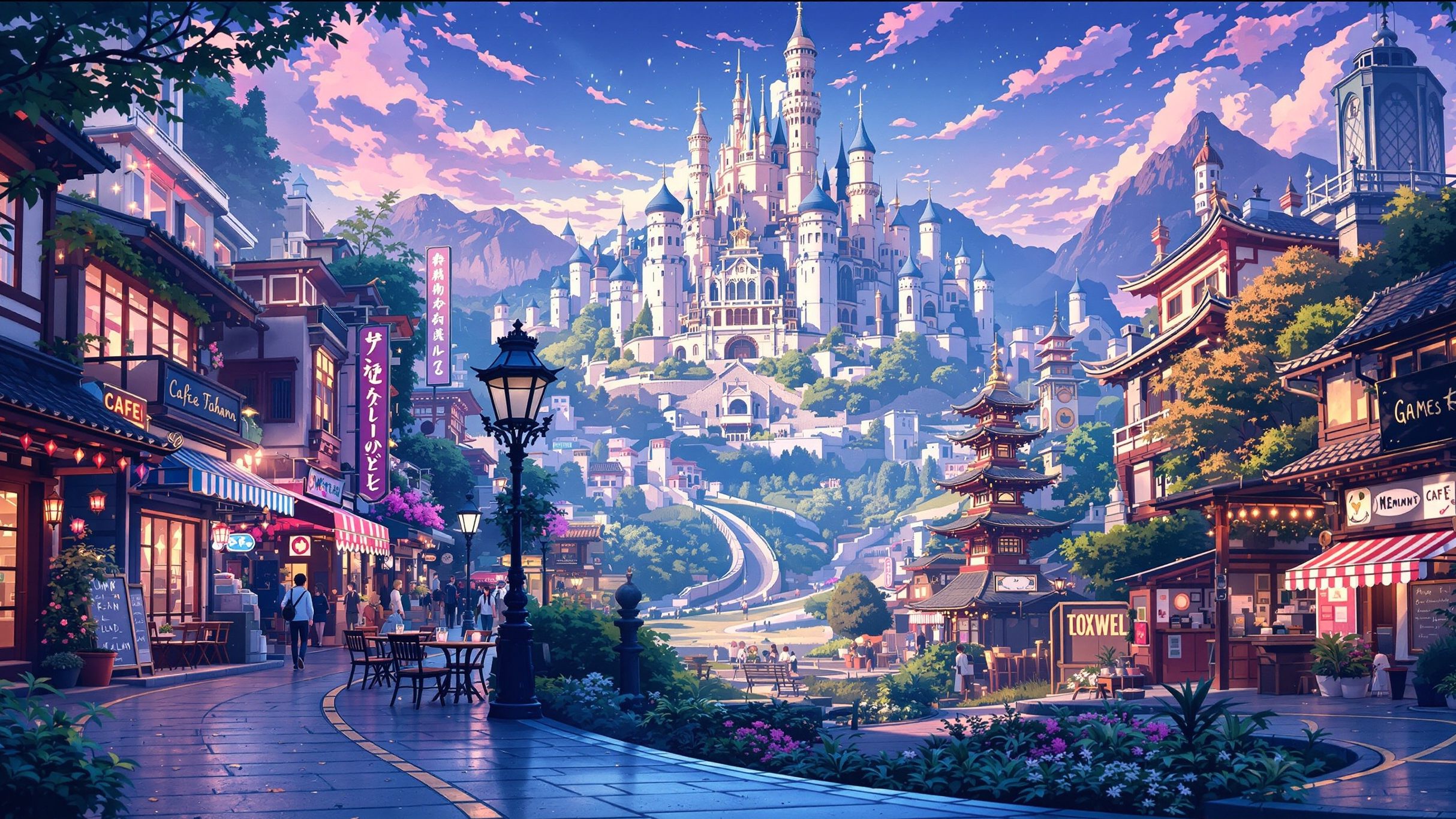
Welcome to the Neon Dream That Bites Back
Cyberpunk anime is the genre that looks like a playlist you can live inside. It’s rain-slick streets glowing electric blue. It’s towering skylines that feel infinite, stacked with balconies, cables, and windows like a living circuit board. It’s the quiet hum of machines under human conversations, the sense that something is always watching, and the strange beauty of a world that’s falling apart in perfect color. But cyberpunk isn’t just “cool future aesthetics.” It’s a mood with teeth. The neon isn’t decoration; it’s a lure. The tech isn’t magic; it’s leverage. And the dream isn’t innocent; it’s monetized. Cyberpunk anime thrives on contradiction: high technology and low trust, breathtaking cities and broken systems, limitless connection and profound isolation. If you’ve ever felt fascinated and unsettled at the same time, you already understand why cyberpunk hits so hard. This guide breaks cyberpunk down into three major lenses: neon cities, tech noir storytelling, and digital dreams. You’ll learn the visual language, the emotional themes, and the reasons cyberpunk keeps pulling fans back—especially in an era where the future feels like it’s arriving faster than we can process.
A: Advanced tech in a gritty, unequal society—often with noir tone, corporate power, and identity questions.
A: It’s a branch of sci-fi with specific themes: systems, surveillance, upgrades, and street-level struggle.
A: Rain adds reflections, motion, and mood—turning neon into cinematic glow and depth.
A: Noir storytelling—mystery, moral ambiguity—set in a high-tech world with shadowy power structures.
A: Virtual spaces where people escape, reinvent themselves, or get trapped by systems that monetize desire.
A: Neon rim lighting, layered megacities, haze, wet streets, dense signage shapes (blank), and surveillance vibes.
A: Not always—many balance despair with small wins, human connection, and stubborn hope.
A: They’re visually rich and emotionally tense—beauty plus danger keeps your attention locked.
A: Yes—small warm pockets (cafés, apartments, rooftops) create comfort inside the chaos.
A: Use abstract signs and UI shapes, blank surfaces, and symbols without readable words.
What Cyberpunk Actually Means: High Tech, Low Trust
Cyberpunk is a genre built on a simple collision. Technology advances faster than society can ethically handle it. The result is a world where machines can do miracles, but people still struggle to survive. Corporations grow larger than governments. Surveillance becomes normal. Upgrades and implants promise power, but often come with ownership, debt, or control. The streets buzz with innovation, yet the average person feels more replaceable than ever.
That’s the “punk” part. Cyberpunk stories don’t usually follow kings or chosen ones. They follow people living close to the ground: hackers, couriers, detectives, street doctors, mechanics, and drifters. These characters don’t fight dragons. They fight systems. They resist being turned into data, property, or a product. Even when they lose, the act of pushing back is the point. Cyberpunk is about friction—human will grinding against a machine world that wants compliance.
Neon Cities: Why the Urban Night Becomes a Character
Cyberpunk anime loves cities because cities are already stories. They’re layers of people, power, architecture, commerce, and hidden corners. Cyberpunk turns that into a visual anthem by pushing density and contrast to the extreme. Skyscrapers stack into the sky. Streets feel crowded even when empty. Cables, pipes, ducts, and signage shapes (kept unreadable) imply endless infrastructure. The city becomes a character—alive, hungry, seductive, and oppressive.
Neon lighting is central because it creates instant mood and hierarchy. Glow suggests commerce and temptation. Harsh light suggests surveillance. Cold light suggests corporate control. Warm light in a tiny apartment suggests the last pocket of humanity. The most iconic cyberpunk frames often balance these lights like a moral map. Where the light is warm, the world feels human. Where the light is cold, the world feels owned.
Rain shows up constantly because it turns the city into a mirror. Reflections double the color and add depth. Mist softens edges so neon feels natural rather than theatrical. The rain also feels symbolic: a world that is always “washing,” yet never cleans itself. Everything stays glossy, broken, and beautiful.
Tech Noir: Mystery Stories in a Digital Fog
Cyberpunk anime often leans into noir because noir is a genre about distrust. Noir is shadowy, morally ambiguous, and driven by questions rather than certainties. Who is lying? Who benefits? Who is being used? In cyberpunk, those noir questions become even sharper because technology adds new layers of deception. Memory can be edited. Faces can be masked. Identities can be borrowed. Truth can be simulated.
Tech noir aesthetics mirror this uncertainty. Scenes are often framed tightly. Shadows dominate. Reflections split characters into multiple versions of themselves. The camera lingers on surveillance angles and distant silhouettes to make the audience feel watched. Even when the plot isn’t explicitly about a mystery, the world feels like one. That’s the tech noir vibe: the sense that reality is a case file, and the clues are everywhere. Cyberpunk noir also tends to reject clean heroes. Characters are compromised. Everyone has a price, a secret, or a wound. The emotional power comes from watching people try to stay human anyway, even when the city makes humanity feel like a weakness.
Cybernetics and the Body: Where Identity Gets Complicated
One of cyberpunk anime’s most compelling obsessions is the upgraded body. Cybernetics promise strength, speed, endurance, and new senses. But the deeper question is always the same: if you replace parts of yourself, do you remain yourself? Where does the “you” live—memory, consciousness, soul, or something else?
Cyberpunk uses the body as a battlefield for autonomy. Implants can be liberating, but they can also be controlling. Upgrades can be expensive, creating class division. In the darkest versions, upgrades can be owned, leased, or remotely disabled. The body becomes a device. A person becomes a platform. That’s why cyberpunk scenes that focus on hands, eyes, ports, and wires hit so hard. They’re intimate and unsettling. They remind you that the future doesn’t just change the world. It changes what a person is.
And yet, cyberpunk doesn’t always treat cybernetics as horror. Some stories frame upgrades as self-expression—customization, transformation, identity play. That tension is part of what makes cyberpunk feel modern. The same tech can be empowerment or exploitation depending on who controls it.
Digital Dreams: Virtual Worlds as Escape, Art, and Trap
Cyberpunk anime is fascinated by the idea that reality can be optional. Digital dreams are the virtual spaces where people escape, reinvent themselves, or get swallowed by systems designed to monetize longing. These worlds might look like glowing geometric oceans, endless neon corridors, or surreal cities made of light. Visually, they often trade grime for elegance. The dream space feels cleaner, smoother, more controllable than the real street.
That contrast is the hook. Digital dreams promise freedom from the body, from poverty, from danger, from the limits of biology. But cyberpunk never lets the dream stay innocent for long. Virtual spaces often come with surveillance. Identity can become currency. The system can rewrite your experience. And the dream can become a cage if it’s the only place you feel alive. The most powerful cyberpunk anime uses digital dreams to ask a brutal question: if a virtual life feels more meaningful than your real one, which is the “real” life? That’s not just sci-fi anymore. It’s a modern anxiety turned into art.
The Visual Language of Cyberpunk: How to Spot It Instantly
Cyberpunk anime has one of the most recognizable aesthetics in the medium, and it’s built from a handful of visual codes. The first is contrast: dark environments punctured by intense light. The second is density: layered architecture, cables, vents, stacked signs, and crowded frames that imply endless city life. The third is atmosphere: haze, steam, smoke, and rain that create depth and soften neon into a believable glow.
The fourth is reflection. Cyberpunk loves glass, water, and polished metal because reflections symbolize divided identity. A character reflected in a puddle is a character split between versions of themselves. A city reflected in a visor is a reminder that the world is always mediated.
The fifth is camera language. Low angles make towers feel oppressive. Tight frames create paranoia. Wide skyline shots create awe and dread at the same time. Cyberpunk scenes often feel like you’re viewing the world through a lens that doesn’t fully trust what it sees.
Why Cyberpunk Feels So Addictive
Cyberpunk is addictive because it’s visually rich and emotionally tense. The world is full of detail, so your eyes never get bored. The mood is full of contradiction, so your mind stays engaged. Beauty and danger share the same frame. Hope and despair coexist. The genre also offers an emotional fantasy: the idea that one person can still matter in a world run by systems.
Even when cyberpunk stories are dark, they often hide warmth in small places—an apartment with a warm lamp, a rooftop conversation, a tiny shop on a rainy street. Those human pockets are like oxygen. They make the city’s coldness feel sharper, but they also make the story feel worth it. Cyberpunk doesn’t just show you a broken future. It shows you the reasons people still love, dream, and fight inside it.
Cyberpunk Isn’t Only Darkness: The Hidden Soft Side
One of the biggest misconceptions is that cyberpunk must be relentlessly grim. In reality, cyberpunk can be strangely cozy. The city can be dangerous, but it can also be alive in comforting ways. There’s warmth in the late-night noodle shop glow. There’s intimacy in being anonymous among crowds. There’s romance in rooftop views and neon reflections. There’s peace in a tiny room where the rain taps the window like a heartbeat. These softer scenes are important because they show what the characters are protecting. Without moments of quiet, cyberpunk becomes aesthetic-only. With quiet, the genre becomes human. The contrast between cold streets and warm pockets is where cyberpunk becomes emotionally unforgettable.
Where Cyberpunk Anime Goes Next: The Future of the Neon Dream
Cyberpunk keeps evolving because technology keeps evolving. As real life grows more connected, more surveilled, more algorithm-driven, cyberpunk feels less like prediction and more like metaphor. The genre doesn’t need to be “accurate” to be relevant. It needs to capture a feeling: the sense that the future is thrilling and frightening at the same time.
New cyberpunk anime will continue to explore identity, ownership, and reality—but the visuals will keep adapting too. The neon dream will remain, because it’s the perfect symbol: dazzling, overwhelming, and impossible to ignore. Cyberpunk anime doesn’t just ask what the future will look like. It asks what it will cost.
The Takeaway: Cyberpunk Is a Mood, a Warning, and a Love Letter
Cyberpunk anime is neon cities and tech noir, yes—but it’s also a love letter to human stubbornness. In a world that treats people like data, cyberpunk insists that the soul still matters. It insists that identity isn’t just hardware. It insists that even inside systems built for control, people still find freedom in small choices. That’s why the genre endures. The city glows. The rain falls. The screens flicker. The dream pulls you in. And somewhere in the digital noise, a human voice still says: I’m here.